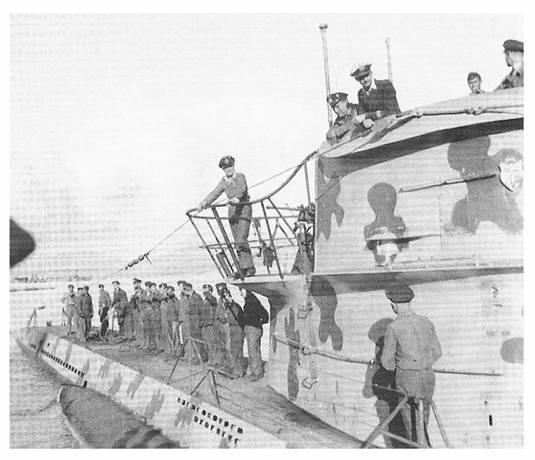
; algo más...................................
Como los submarinos en el Mediterráneo ayudaron a Rommel.
Reemplazos en 1942.
El U-605 pasó por Gibraltar el 10 de octubre y fue hundido frente a Orán el 14 de noviembre de 1942 por un Lockheed Hudson del Escuadrón N° 233 de la RAF.
El U-458 pasó por Gibraltar el 11 de octubre de 1942.
El U-593 pasó por Gibraltar el 11 de octubre de 1942; y hundió al Browning de 5.332 toneladas del convoy KMS 2 el 12 de noviembre, al Daflia de 1.940 toneladas y al Kaying de 2.626 toneladas el 18 de marzo de 1943, y al City of Guildford de 5.157 toneladas del convoy XT 7 el 27 de marzo.
El U-660 pasó por Gibraltar el 11 de octubre y fue hundido frente a Orán el 12 de noviembre de 1942 por destructores.
El U-617 pasó por Gibraltar el 08 de noviembre de 1942, hundió el remolcador HMS Saint Issey el 28 de diciembre, el Annitsa de 5.324 toneladas y el Harboe Jensen de 1.862 toneladas el 15 de enero de 1943, el HMS Welshman el 1° de febrero y al Corona de 3.264 toneladas y al Henrik de 1.350 toneladas del convoy AW 22 el 05 de febrero.
El U-407 pasó por Gibraltar el 09 de noviembre de 1942 y hundió el Viceroy of India de 19.627 toneladas el 11 de noviembre.
El U-595 pasó por Gibraltar el 09 de noviembre y fue hundido frente a Orán el 14 de noviembre de 1942 por Lockheed Hudsons.
El U-596 pasó por Gibraltar el 09 de noviembre de 1942, hundió el LCI-162 el 07 de febrero de 1943, dañó el barco Empire Standard de 7.047 toneladas y el Fort Norman de 7.133 toneladas del convoy KMS 10 el 09 de marzo y hundió el barco Fort a la Corne de 7.133 toneladas y el barco Hallanger de 9.551 toneladas del convoy ET 16 el 30 de marzo de 1943.
El U-755 pasó por Gibraltar el 09 de noviembre de 1942 y hundió al arrastrero Sergent Gouarne el 26 de marzo de 1943.
El U-259 pasó por Gibraltar el 11 de noviembre y fue hundido el 15 de noviembre de 1942 por un Lockheed Hudson del Escuadrón No. 500 de la RAF.
El U-380 pasó Gibraltar y hundió al Nieuw Zealand de 11.069 toneladas el 11 de noviembre de 1942, y dañó el barco Ocean Seaman del convoy ET 14 el 15 de marzo de 1943.
El U-443 pasó por Gibraltar el 05 de diciembre de 1942 y hundió el HMS Blean el 11 de diciembre y el Edencrag de 1.592 toneladas del convoy TE 9 el 14 de diciembre antes de ser hundido por destructores el 23 de febrero de 1943.
El U-602 pasó por Gibraltar el 08 de diciembre de 1942 y dañó al HMS Porcupine el 09 de diciembre.
El U-301 pasó por Gibraltar el 09 de diciembre de 1942 y fue torpedeado por el HMS Sahib el 20 de enero de 1943.
El U-224 pasó por Gibraltar el 09 de enero de 1943 y fue hundido el 13 de enero por el HMCS Ville de Quebec.
El U-458 pasó por Gibraltar el 11 de octubre de 1942.
El U-593 pasó por Gibraltar el 11 de octubre de 1942; y hundió al Browning de 5.332 toneladas del convoy KMS 2 el 12 de noviembre, al Daflia de 1.940 toneladas y al Kaying de 2.626 toneladas el 18 de marzo de 1943, y al City of Guildford de 5.157 toneladas del convoy XT 7 el 27 de marzo.
El U-660 pasó por Gibraltar el 11 de octubre y fue hundido frente a Orán el 12 de noviembre de 1942 por destructores.
El U-617 pasó por Gibraltar el 08 de noviembre de 1942, hundió el remolcador HMS Saint Issey el 28 de diciembre, el Annitsa de 5.324 toneladas y el Harboe Jensen de 1.862 toneladas el 15 de enero de 1943, el HMS Welshman el 1° de febrero y al Corona de 3.264 toneladas y al Henrik de 1.350 toneladas del convoy AW 22 el 05 de febrero.
El U-407 pasó por Gibraltar el 09 de noviembre de 1942 y hundió el Viceroy of India de 19.627 toneladas el 11 de noviembre.
El U-595 pasó por Gibraltar el 09 de noviembre y fue hundido frente a Orán el 14 de noviembre de 1942 por Lockheed Hudsons.
El U-596 pasó por Gibraltar el 09 de noviembre de 1942, hundió el LCI-162 el 07 de febrero de 1943, dañó el barco Empire Standard de 7.047 toneladas y el Fort Norman de 7.133 toneladas del convoy KMS 10 el 09 de marzo y hundió el barco Fort a la Corne de 7.133 toneladas y el barco Hallanger de 9.551 toneladas del convoy ET 16 el 30 de marzo de 1943.
El U-755 pasó por Gibraltar el 09 de noviembre de 1942 y hundió al arrastrero Sergent Gouarne el 26 de marzo de 1943.
El U-259 pasó por Gibraltar el 11 de noviembre y fue hundido el 15 de noviembre de 1942 por un Lockheed Hudson del Escuadrón No. 500 de la RAF.
El U-380 pasó Gibraltar y hundió al Nieuw Zealand de 11.069 toneladas el 11 de noviembre de 1942, y dañó el barco Ocean Seaman del convoy ET 14 el 15 de marzo de 1943.
El U-443 pasó por Gibraltar el 05 de diciembre de 1942 y hundió el HMS Blean el 11 de diciembre y el Edencrag de 1.592 toneladas del convoy TE 9 el 14 de diciembre antes de ser hundido por destructores el 23 de febrero de 1943.
El U-602 pasó por Gibraltar el 08 de diciembre de 1942 y dañó al HMS Porcupine el 09 de diciembre.
El U-301 pasó por Gibraltar el 09 de diciembre de 1942 y fue torpedeado por el HMS Sahib el 20 de enero de 1943.
El U-224 pasó por Gibraltar el 09 de enero de 1943 y fue hundido el 13 de enero por el HMCS Ville de Quebec.
Fuentes: Mediterranean U-boat Campaign (World War II) | Encyclopedia MDPI
Saludos. Raúl M
 .
.